

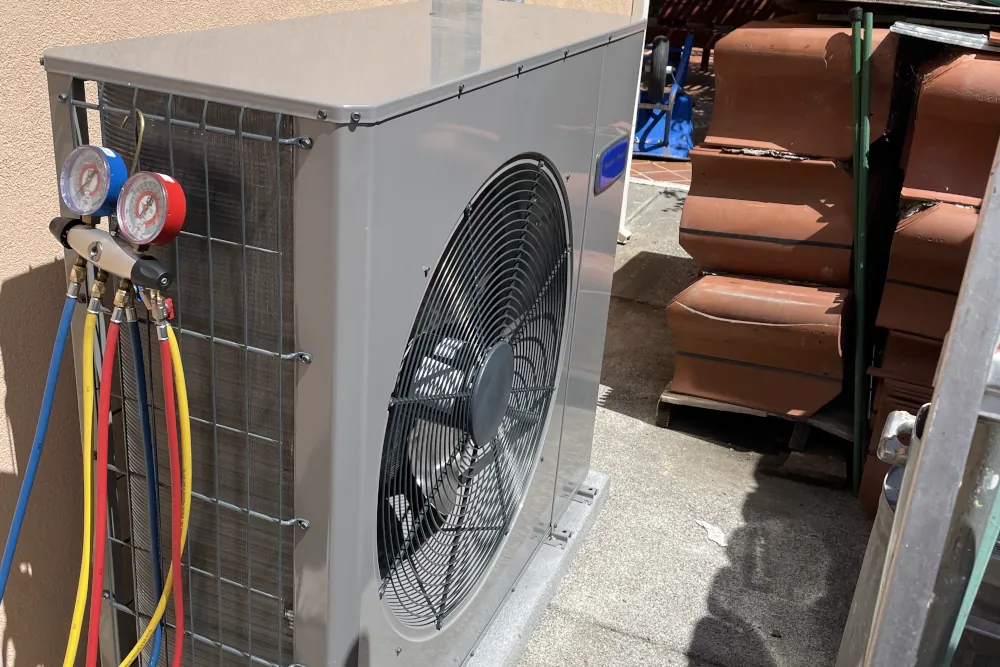
Why Is My AC Freezing Up?
Your AC is freezing up because of restricted airflow, low refrigerant levels, dirty coils, or running in cold weather. When warm air can’t flow over the evaporator coil properly, the moisture that collects on the coil freezes. This ice buildup makes your AC work harder, reduces cooling, and can damage your system if not fixed quickly.
A frozen air conditioner is a common problem that many homeowners face, especially during hot summer months when your AC works overtime. The good news is that most causes of AC freeze-ups can be fixed easily, sometimes even by yourself. Let’s look at why this happens and what you can do about it.
Table of Contents
7 Common Reasons Why Your AC Is Freezing Up
Understanding why your air conditioner freezes up is the first step to fixing the problem. Here are the most common causes:
1. Dirty Air Filters
Dirty air filters are the number one reason why ACs freeze up. When your filter gets clogged with dust, pet hair, and other particles, it blocks airflow to your evaporator coil. Without enough warm air passing over it, the coil gets too cold and freezes.
You should check your air filter every month during heavy use seasons. If you can’t see light through it when holding it up, it’s time for a change. Most homes need filter replacements every 1-3 months, depending on pets, allergies, and air quality.
2. Low Refrigerant Levels
Your AC needs the right amount of refrigerant to work properly. If there’s a leak in your system, the refrigerant level drops. This causes the pressure in your AC to fall, making the evaporator coil much colder than it should be.
Signs of low refrigerant include hissing sounds from your AC unit, weak cooling, and higher energy bills. This problem requires a professional HVAC technician to find and fix the leak, then recharge your system with the correct amount of refrigerant.
3. Dirty Evaporator Coil
Over time, your evaporator coil collects dirt and grime even with clean filters. This dirt layer acts like a blanket, preventing the coil from absorbing heat properly. When the coil can’t absorb enough heat, its temperature drops below freezing, and ice forms.
Professional cleaning of your evaporator coil should be part of your yearly AC maintenance. This helps prevent freeze-ups and keeps your system running efficiently.
4. Blocked Air Ducts
If your home’s air ducts are blocked, crushed, or leaking, they can restrict airflow just like a dirty filter. When not enough air reaches your evaporator coil, it gets too cold and freezes.
Check for closed vents, furniture blocking returns, or damaged ductwork. Make sure all vents are open, even in rooms you don’t use often. For serious duct problems, you’ll need professional inspection and repair.
5. Running AC in Cold Weather
Most home air conditioners aren’t designed to run when outdoor temperatures drop below 60°F. If you run your AC during cool weather, the pressure inside the system drops too low, causing the coil to freeze.
Modern AC units often have low-temperature protection that prevents operation in cold weather. If yours doesn’t, avoid using your AC when temperatures are cool outside.
6. Broken Blower Fan
Your AC’s blower fan pushes air across the evaporator coil. If this fan is running too slowly or not at all due to a bad motor, worn belt, or electrical problem, airflow is reduced and your coil can freeze.
Signs of blower problems include weak airflow from vents, strange noises, or no air at all. This usually requires professional repair since it involves electrical components and specialized parts.
7. Faulty Thermostat
Sometimes the problem isn’t with your AC unit at all, but with the thermostat controlling it. If your thermostat is malfunctioning, it might keep your AC running non-stop, which can lead to freezing.
Check if your AC runs constantly or if the temperature reading seems wrong. You might need to replace batteries, recalibrate, or replace an old thermostat.
How to Tell If Your AC Is Frozen
Before you can fix a frozen AC, you need to confirm that’s actually the problem. Here are signs to look for:
- Warm air or no air coming from your vents
- Water puddles around your indoor unit
- Visible ice on the copper lines or at the outdoor unit
- AC running constantly but not cooling
- Unusual hissing or bubbling sounds
If you notice these symptoms, it’s time to check your system for ice. The most obvious place to look is the refrigerant lines (the copper pipes) near your indoor unit. These often freeze first. You might also see ice on the outdoor unit’s coils.
Step-by-Step Solutions for a Frozen AC
If your air conditioner is frozen, follow these steps to fix it safely:
Immediate Steps to Take
- Turn off your AC: Switch your thermostat to “off” immediately. Continuing to run a frozen AC can damage the compressor, which is expensive to replace.
- Switch to fan mode: Turn your thermostat to “fan only” mode. This helps melt the ice faster by blowing warm air over the frozen components.
- Be patient: Allow 24 hours for the ice to melt completely. Trying to chip ice off can damage delicate fins and coils.
DIY Fixes You Can Try
Once the ice has melted completely, you can try these fixes:
- Replace the air filter: Install a new, clean filter that matches your system’s specifications.
- Check all vents and returns: Make sure all vents are open and unblocked by furniture, rugs, or curtains.
- Clean around the outdoor unit: Remove leaves, grass, and debris that might be blocking airflow to your outdoor condenser unit. Maintain at least 2 feet of clear space around it.
- Check your thermostat settings: Make sure it’s set to “cool” and at a reasonable temperature (not too low).
When to Call a Professional
While some AC freeze-up causes can be fixed yourself, others require professional help. Call an HVAC technician if:
- Your AC freezes up again after changing the filter and clearing vents
- You suspect a refrigerant leak (hissing sounds, poor cooling)
- Your system makes unusual noises when running
- You notice electrical problems like breakers tripping
- Your AC is more than 10 years old and having recurring problems
Professional technicians have the tools and knowledge to safely diagnose refrigerant issues, electrical problems, and mechanical failures that homeowners can’t fix safely.
Preventing Future AC Freeze-Ups
The best way to deal with a frozen AC is to prevent it from happening in the first place. Here’s how:
Regular Maintenance Tips
- Change filters regularly: Mark your calendar to check filters monthly during summer.
- Schedule yearly tune-ups: Professional maintenance before summer helps catch problems early.
- Keep vents open: Never close more than 20% of your home’s vents.
- Clean outdoor units: Remove debris and trim plants around your condenser unit.
- Install a programmable thermostat: This prevents your AC from running unnecessarily.
Signs Your AC Needs Professional Attention
Even with good maintenance, watch for these warning signs that your AC needs professional help:
- Energy bills suddenly increasing
- Uneven cooling in your home
- Strange smells when your AC runs
- Unusual noises like grinding, squealing, or banging
- Frequent cycling on and off
- Age over 10-15 years with declining performance
Addressing these issues promptly can prevent freeze-ups and extend your AC’s lifespan.
Understanding How Your AC Works
To better understand why freezing happens, it helps to know the basics of how your air conditioner works:
Your AC doesn’t actually create cold air—it removes heat from your home. It does this using a refrigerant that cycles through these main components:
- Evaporator coil (inside your home): The refrigerant absorbs heat from your indoor air and changes from liquid to gas.
- Compressor (in outdoor unit): Pressurizes the refrigerant gas, raising its temperature.
- Condenser coil (in outdoor unit): Releases the collected heat outside and changes the refrigerant back to liquid.
- Expansion valve: Reduces pressure on the liquid refrigerant, cooling it dramatically before it returns to the evaporator.
When this cycle is disrupted by airflow problems or refrigerant issues, the evaporator coil can get too cold (below 32°F), causing moisture in the air to freeze on it.
Frequently Asked Questions About Frozen ACs
How long does it take for an AC to defrost?
A frozen AC typically takes 24 hours to thaw completely. Running the fan without cooling can speed this up. Never try to chip or scrape ice off—this can damage expensive components.
Can I pour hot water on my frozen AC?
No, never pour water on your AC system. This can damage electrical components and create safety hazards. The safest method is turning off cooling and running the fan until ice melts naturally.
Will a frozen AC fix itself?
No, a frozen AC won’t fix itself. While the ice might temporarily melt if you turn off the system, it will freeze again unless you address the underlying cause, such as dirty filters or low refrigerant.
How much does it cost to fix a frozen AC?
Repair costs vary widely depending on the cause:
– Filter replacement: $10-$30 (DIY)
– Professional cleaning: $100-$400
– Refrigerant leak repair: $200-$1,500
– Blower motor replacement: $300-$900
– Compressor replacement: $1,200-$2,800
Is a frozen AC dangerous?
A frozen AC isn’t immediately dangerous to your health, but it can cause water damage to your home when ice melts. Continuing to run a frozen system can also damage the compressor, leading to expensive repairs or replacement.
How often should I service my AC to prevent freezing?
Schedule professional AC maintenance once a year, ideally in spring before heavy use begins. Change filters every 1-3 months depending on your home’s conditions. This regular care prevents most causes of AC freeze-ups.
When to Replace vs. Repair a Freezing AC
If your AC keeps freezing despite repairs, you might need to consider replacement. Here are factors to consider:
- Age of your system: If your AC is over 10-15 years old, replacement might be more cost-effective than ongoing repairs.
- Repair frequency: Multiple repairs within a year suggest declining reliability.
- Repair costs: When a repair exceeds 50% of replacement cost, replacement is usually better.
- Energy efficiency: Newer models can save 20-40% on cooling costs compared to older units.
- Refrigerant type: If your system uses R-22 (Freon), which is being phased out, replacement is often better than recharging.
A professional HVAC technician can help you weigh these factors and make the best decision for your home and budget.
Turn to AC Professionals
Don’t let a frozen AC leave you sweating this summer. If you’re experiencing AC freeze-ups or want to prevent them with professional maintenance, contact Alamo Heating & Cooling today. Our experienced technicians can diagnose and fix your AC problems quickly, keeping your home comfortable all season long. Schedule your appointment now for peace of mind and reliable cooling!