
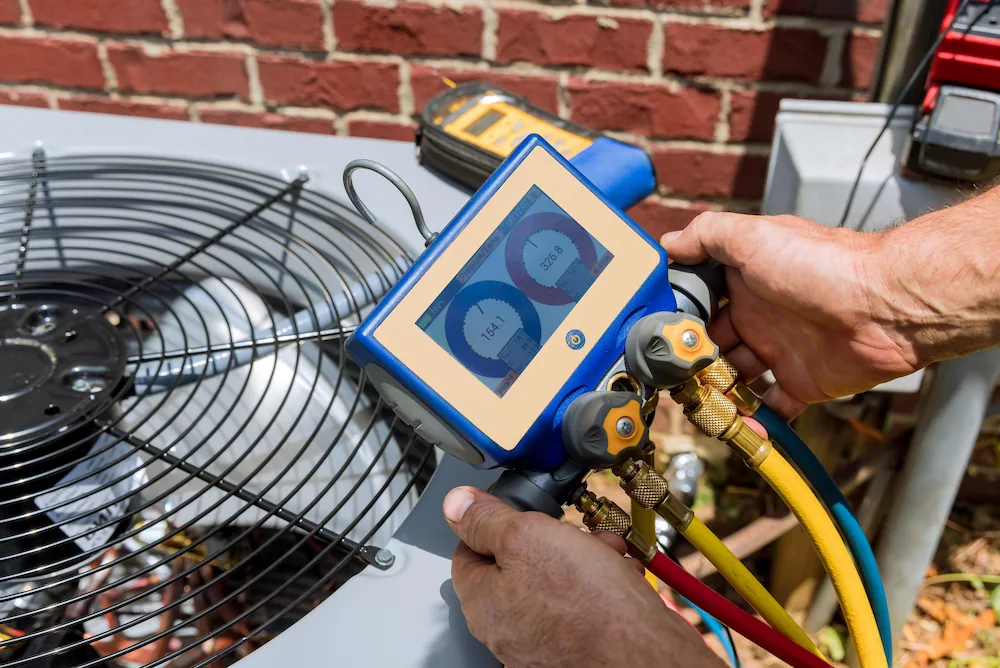
Common Causes of AC Refrigerant Leaks and How to Fix Them
AC refrigerant leaks happen when the chemicals that cool your home escape from your air conditioning system. These leaks are a big problem because your AC needs refrigerant to work right. The most common causes of AC refrigerant leaks include old age, factory defects, corrosion, vibration damage, and poor installation. You can fix these problems by finding the leak, sealing small holes, replacing damaged parts, or calling a pro for bigger issues. Regular check-ups can help stop leaks before they start.
Let’s look deeper at why AC refrigerant leaks happen and what you can do about them.
Table of Contents
What is AC Refrigerant and Why is it Important?
AC refrigerant is a special chemical that helps your air conditioner make cool air. Think of it like the magic juice that takes the heat from inside your home and moves it outside. Without enough refrigerant, your AC can’t do its job.
Your air conditioner doesn’t use up refrigerant like a car uses gas. The refrigerant just moves around in a closed loop, changing from liquid to gas and back again. This process is what makes the air cool.
When your system has a refrigerant leak, it’s like having a hole in a water balloon. The magic cooling juice escapes, and your AC stops working well. This is why finding and fixing refrigerant leaks is so important.
5 Most Common Causes of AC Refrigerant Leaks
Let’s look at the main reasons why your AC might be losing its cooling power.
1. Natural Wear and Tear
Just like your favorite shoes wear out over time, your AC parts can get old and tired too. Most air conditioners last about 10-15 years. As they age, the metal parts can get weak and develop tiny cracks.
The constant pressure changes inside your AC system make these cracks worse over time. The vibrations from your AC turning on and off can also make small holes bigger.
If your AC is getting up there in years, wear and tear might be why you’re losing refrigerant. Older systems are more likely to develop leaks just because they’ve been working hard for so long.
2. Factory Defects
Sometimes, AC parts aren’t made quite right from the beginning. These factory defects might not cause problems right away, but they can lead to leaks later on.
For example, a tiny flaw in a joint or connection might get worse over time until refrigerant starts escaping. Or a part might be just a little too thin in one spot, making it the weak link in your system.
If your AC is fairly new but still having refrigerant leaks, a factory defect could be the culprit. This is why it’s important to keep your warranty information and work with licensed professionals who can help you get defective parts replaced.
3. Corrosion and Formicary Corrosion
Corrosion is like rust, but for your AC parts. It happens when the metal in your system reacts with chemicals in the air or moisture. Over time, corrosion can eat through metal, creating holes where refrigerant can escape.
A special type called formicary corrosion is extra sneaky. It makes tiny, ant-like tunnels in copper parts that you can barely see. This often happens in homes with certain cleaning products or chemicals in the air.
Homes near the ocean can have more corrosion problems because of salt in the air. Also, if you use lots of chemical cleaners or have a hobby that uses chemicals, your AC might be more at risk for corrosion leaks.
4. Vibration and Physical Damage
Your AC has many parts that connect to each other. When the system runs, it vibrates. These vibrations can loosen connections over time, creating gaps where refrigerant can leak out.
The refrigerant lines (those copper tubes) can also get damaged if something hits them. Maybe someone bumped into the outdoor unit with a lawnmower, or a fallen branch hit it during a storm.
Even small bumps can cause big problems if they happen in just the wrong spot. That’s why it’s good to keep the area around your AC units clear and protected.
5. Poor Installation or Service
If your AC wasn’t put in correctly, it might be more likely to leak. Connections that aren’t tight enough, parts that don’t fit just right, or refrigerant lines that are bent too sharply can all lead to leaks.
Sometimes, problems happen during service visits too. If a technician isn’t careful when working on your system, they might accidentally damage something or not tighten connections properly.
This is why it’s super important to choose qualified, experienced professionals for AC installation and service. A little extra care during setup can prevent big headaches later on.
How to Identify a Refrigerant Leak
Now that you know what causes leaks, let’s talk about how to spot them before they become major problems.
Warning Signs of a Refrigerant Leak
Your AC will give you clues when it’s losing refrigerant. Here are the main signs to watch for:
– Your home doesn’t get cool enough, even when the AC runs all day
– The air coming from your vents isn’t as cold as it used to be
– Your AC runs longer than normal to reach the temperature you want
– You hear a hissing or bubbling sound near your AC unit
– Your energy bills are suddenly higher for no clear reason
– Ice forms on the copper lines or the outdoor unit
– The indoor coil (the part inside your house) freezes up
If you notice any of these signs, your AC might be telling you it’s losing refrigerant.
DIY Methods to Check for Leaks
While some leaks need special tools to find, there are a few ways you can check for obvious problems:
Soap Bubble Test: Mix dish soap with water in a spray bottle. Spray the solution on copper lines and connections. If bubbles form, you might have found a leak.
Listen Carefully: Turn off other noises in your home and listen near your AC. A hissing sound often means refrigerant is escaping through a hole.
Look for Oil Stains: Refrigerant often carries a little oil with it when it leaks. Check for oily spots on connections or copper lines.
Check for Ice: If parts of your system are frozen when they shouldn’t be, that’s a big clue that refrigerant levels are low.
Remember, these methods only find obvious leaks. Many refrigerant leaks are too small to see or hear without special equipment.
When to Call a Professional
While it’s good to know the warning signs, finding and fixing refrigerant leaks usually requires professional help. You should call a pro if:
– You’ve noticed any of the warning signs listed above
– Your AC isn’t cooling like it used to
– You’ve tried the DIY methods and suspect a leak
– Your system is more than 10 years old and hasn’t been checked recently
– You can actually see or hear refrigerant escaping
Professional technicians have special tools like electronic leak detectors and UV dye tests that can find even tiny leaks. They also have the training to safely handle refrigerant, which is important because these chemicals can be harmful to people and the environment.
How to Fix AC Refrigerant Leaks
Once you’ve found a leak, it’s time to fix it. Here’s what you need to know about solving refrigerant problems.
Temporary vs. Permanent Solutions
Some fixes are just band-aids, while others solve the problem for good.
Temporary Fixes:
– Adding more refrigerant without fixing the leak (this is like filling a leaky bucket)
– Using stop-leak products (these sometimes work for very small leaks but can damage your system)
– Sealing very small leaks with special epoxy (this might hold for a while but not forever)
Permanent Solutions:
– Replacing the damaged component completely
– Properly brazing (a type of metal welding) the leaking area
– Installing a new system if the old one has multiple or severe leaks
While temporary fixes might cost less today, they usually cost more in the long run. It’s like putting a small bandage on a big cut – it might help for a minute, but it’s not really solving the problem.
Professional Repair Methods
Here’s what a good technician will do to fix your refrigerant leak:
1. Find the exact location of all leaks using electronic detectors or dye tests
2. Recover any remaining refrigerant (to protect the environment)
3. Repair or replace the damaged parts
4. Pressure test the system to make sure all leaks are fixed
5. Vacuum the system to remove air and moisture
6. Recharge with the correct amount of refrigerant
7. Test the system to make sure it’s working properly
For small leaks in accessible places, repairs might be simple. For leaks in hard-to-reach spots or on major components, replacement might be the better option.
DIY Repair Options (and Their Limitations)
There are a few things homeowners can do, but be aware of the limits:
What You Can Do:
– Keep your system clean and free from debris
– Change filters regularly to reduce strain on the system
– Clear the area around your outdoor unit
– Use a soap solution to check for obvious leaks
– Apply epoxy sealant to very small, accessible leaks (as a temporary measure)
What You Shouldn’t Do:
– Try to add refrigerant yourself (it’s illegal unless you’re certified)
– Use automotive stop-leak products in your AC
– Ignore small leaks hoping they’ll fix themselves
– Try to take apart major components without proper training
– Continue running your system if you know it has a significant leak
Remember, refrigerant is regulated by the EPA because it can harm the environment. Only certified technicians should handle it. Plus, modern systems use high-pressure refrigerants that can be dangerous if not handled properly.
Preventing Future AC Refrigerant Leaks
The best way to deal with refrigerant leaks is to stop them before they start. Here’s how to keep your AC healthy.
Regular Maintenance Tips
Just like going to the doctor for check-ups helps you stay healthy, regular AC maintenance prevents problems. Here’s what to do:
– Schedule professional maintenance once a year (ideally in spring before hot weather)
– Keep the outdoor unit clean and free from leaves, dirt, and debris
– Make sure nothing blocks airflow around your outdoor unit
– Change your air filter every 1-3 months
– Keep indoor vents clean and unblocked
– Listen for unusual noises and address them quickly
– Watch for changes in cooling performance
During professional maintenance, technicians check refrigerant levels, inspect for early signs of leaks, and make sure all parts are working well together. This can catch small problems before they become big ones.
When to Consider System Replacement
Sometimes, fixing isn’t the best option. Consider replacing your AC if:
– Your system is more than 10-15 years old and has a leak
– Repairs would cost more than half the price of a new system
– You’ve had multiple refrigerant leaks in the past year
– Your system uses R-22 refrigerant (which is being phased out)
– Your energy bills keep rising despite repairs
– Your home isn’t comfortable even after repairs
Newer AC systems are much more energy-efficient and use refrigerants that are better for the environment. Sometimes the smartest long-term decision is to upgrade rather than keep fixing an old, leaky system.
Choosing the Right HVAC Professional
Not all AC technicians are created equal. Here’s what to look for:
– Proper licensing and certification
– EPA certification for handling refrigerants
– Good reviews and recommendations
– Experience with your specific type of system
– Clear explanations of problems and solutions
– Detailed written estimates before work begins
– Warranty on parts and labor
A good professional won’t just fix the immediate problem; they’ll help you understand what happened and how to prevent it in the future. They should be willing to answer your questions and explain their recommendations.
FAQ About AC Refrigerant Leaks
Here are answers to some common questions about AC refrigerant leaks:
Is it normal for an AC to lose refrigerant over time?
No, it’s not normal. Unlike gas in a car, refrigerant doesn’t get “used up” during normal operation. Your AC is designed as a closed system, meaning the refrigerant should cycle continuously without escaping. If your refrigerant level is low, it means you have a leak that needs to be fixed.
How much does it cost to fix a refrigerant leak?
The cost varies depending on where the leak is and how bad it is. Simple leaks might cost $200-$500 to repair, while complex leaks or those requiring major part replacement could cost $1,000-$2,000 or more. The price includes finding the leak, fixing it, and recharging the system with refrigerant.
Can I just add more refrigerant without fixing the leak?
This is not a good idea for several reasons. First, it’s like filling a leaky bucket – the refrigerant will just escape again. Second, leaking refrigerant is bad for the environment. Third, running a system with a leak can damage your compressor, which is the most expensive part to replace. Finally, it’s actually illegal for technicians to just “top off” refrigerant without fixing leaks.
How long does refrigerant last in an AC system?
In a properly functioning system with no leaks, refrigerant should last indefinitely. The same refrigerant keeps cycling through the system year after year. If your system needs more refrigerant, it means you have a leak that should be addressed.
Are refrigerant leaks dangerous?
While refrigerant isn’t highly toxic, it can cause health problems if you’re exposed to high concentrations in enclosed spaces. Symptoms might include headaches, irritated eyes, or breathing problems. Modern refrigerants are also bad for the environment if released into the air. The bigger danger is often to your AC system itself – running with low refrigerant can damage expensive components.
How can I tell if my AC is low on refrigerant?
The main signs include poor cooling performance, longer run times, higher energy bills, ice on the refrigerant lines or coils, and hissing sounds. Your home might feel more humid than usual too, since low refrigerant affects your AC’s ability to remove moisture from the air.
Solving AC Refrigerant Leaks for Good
AC refrigerant leaks are a common problem, but they don’t have to ruin your summer comfort. By understanding the causes of refrigerant leaks and knowing the warning signs, you can catch problems early before they lead to major system damage.
Remember that while some maintenance tasks are great for DIY, refrigerant work should be left to certified professionals. The right technician will not only fix your current leak but help prevent future problems through proper repair techniques and maintenance advice.
If you’re dealing with an AC refrigerant leak or suspect you might have one, don’t wait until your system stops working completely. Contact Alamo Heating & Cooling today for a thorough inspection and professional repair. Our certified technicians can find and fix refrigerant leaks properly, ensuring your system runs efficiently and reliably all summer long. Call us to schedule your appointment and restore your home comfort!