
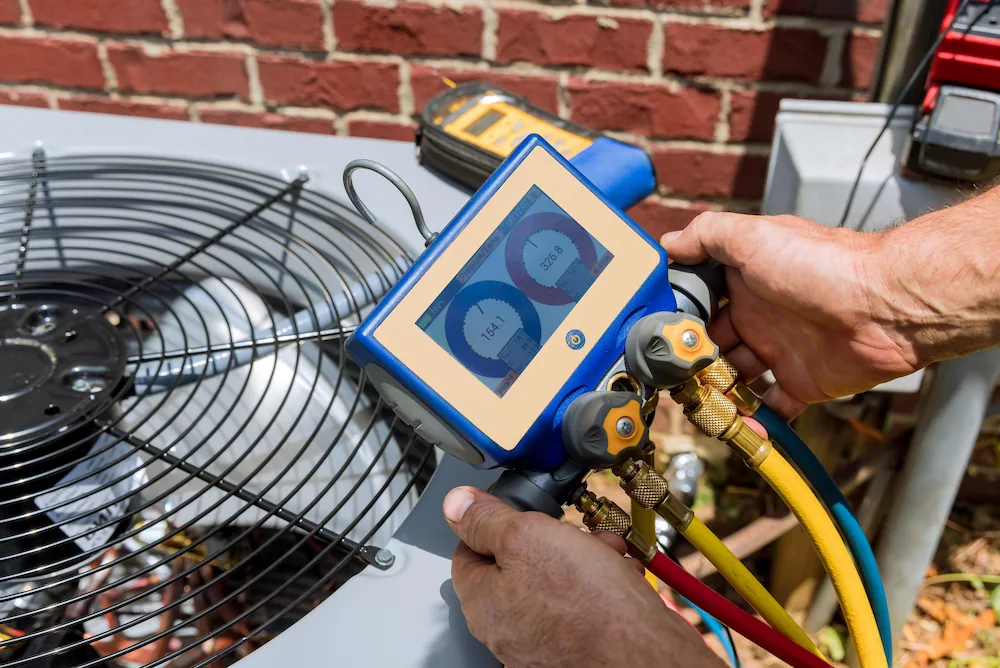
Take Advantage of Refrigerant Technology
The HVAC industry is undergoing a major transformation, with A2L refrigerants leading the charge. These refrigerants offer a promising solution as we transition from hydrofluorocarbons (HFCs) with high global warming potential (GWP). What are A2L refrigerants, and what changes will they bring to cooling systems?
A2L refrigerants are mildly flammable, low-toxicity coolants designed to replace environmentally harmful options. The classification helps technicians and homeowners quickly understand their safety profile. “A” indicates lower toxicity, “2” represents flammability, and “L” denotes low burning velocity.
The Rise of A2L Refrigerants: A Game-Changer for HVAC
The shift toward A2L refrigerants addresses global environmental concerns. New regulations aim to minimize greenhouse gas emissions. The 2020 American Innovation and Manufacturing (AIM) Act mandates an 85% nationwide phasedown of high-GWP HFCs by 2036. This legislation significantly impacts the HVAC landscape.
From January 1, 2025, new residential and light commercial refrigeration units, air conditioners and heat pumps must utilize refrigerants with a GWP of 700 or less. Many A2L refrigerants meet this requirement.
Why A2L Refrigerants Are Gaining Traction
Several factors contribute to the rising popularity of A2L refrigerants among HVAC equipment manufacturers and technicians.
- Lower Environmental Impact: A2L refrigerants possess significantly lower GWPs than older refrigerants. R-32, a common A2L refrigerant, has a GWP of approximately 675, much lower than R-410A’s 2,088 GWP.
- Energy Efficiency: A2L refrigerants can enhance energy efficiency. This translates to lower energy bills for consumers and reduces the overall environmental impact. These sustainable solutions help combat climate change.
- Safety: Although mildly flammable, A2L refrigerants have a higher minimum ignition energy and lower burning velocity. These features make them safer than highly flammable refrigerants.
- Compatibility: Some A2L refrigerants serve as direct replacements. They simplify the transition process for both HVAC equipment manufacturers and consumers.
Understanding A2L Refrigerant Safety
Flammability is a primary concern regarding A2L refrigerants. The “mildly flammable” classification does not imply danger during normal use. A 2018 Purdue University study examined ignition sources for A2L refrigerants.
While hot wires, lit cigarettes, and open flames could ignite leaks, common heat sources like hot plates, static sparks, and hairdryers could not. This study highlights the relative safety of A2L refrigerants in typical environments. These standards apply to residential and commercial settings. Specific codes should be followed.
Key Safety Characteristics of A2L Refrigerants
Understanding the safety aspects of A2L refrigerants involves considering key properties such as Lower Flammability Limit (LFL), Minimum Ignition Energy (MIE), and Heat of Combustion (HOC).
| Characteristic | Description | Implication |
|---|---|---|
| Lower Flammability Limit (LFL) | Minimum concentration for combustion | High LFL necessitates larger leaks to become flammable. |
| Minimum Ignition Energy (MIE) | Lowest energy required for ignition | Higher MIE makes unintended ignition less likely. |
| Heat of Combustion (HOC) | Heat released during combustion | Lower HOC limits severity if ignition occurs. |
These properties of A2L refrigerants offer a safer alternative. They maintain environmental benefits over HFCs. Their low burning velocity enhances overall safety.
The Impact of A2L Refrigerants on HVAC Systems
The shift toward A2L refrigerants requires modifications in HVAC systems. This applies to how systems are designed, installed, and maintained. Equipment manufacturers are already making the necessary adjustments. Changes involve updated safety features, compressor designs, leak detection systems, and better ventilation.
Equipment Changes
HVAC equipment adjustments for A2L refrigerants include improved leak detection and ventilation.
- Improved leak detection systems.
- Enhanced ventilation features.
- Modified compressor designs.
- Updated safety controls and shut-off mechanisms.
Installation and Maintenance Considerations
HVAC technicians require updated procedures for handling A2L refrigerants. Key considerations include using compatible equipment, adhering to safety protocols, ensuring sufficient ventilation, and complying with charge limits. Proper system design and ventilation prevent the formation of flammable concentrations. Understanding the flammability limit is vital for safe handling.
Technicians should consider A2L-compatible tools and equipment. Following updated safety protocols and ventilation procedures are essential for handling these refrigerants. These procedures also maximize the reclamation of the refrigerants.
The Air-Conditioning, Heating, and Refrigeration Institute (AHRI) offers numerous resources. Technicians and homeowners can find training materials and safety guidelines at ahrinet.org/saferefrigerant.
The Global Perspective on A2L Refrigerants
The transition to A2L refrigerants is a global movement. Countries are adopting regulations to phase down HFC refrigerants. This encourages global collaboration and spurs innovation within the HVAC industry. Natural refrigerants like carbon dioxide are also being considered. Regulating bodies worldwide are developing guidelines for these alternatives.
Europe’s F-Gas Regulation has promoted low-GWP refrigerants since 2015. Many European countries are increasingly using A2L refrigerants. The Kigali Amendment to the Montreal Protocol addresses the phasedown of HFCs. HFO blends are becoming prevalent as lower-GWP refrigerants.
Japan is a leader in A2L adoption. R-32 is widely used in air conditioning systems there, which provides insights for other nations. A2L refrigerants and HFO refrigerants are popular low-GWP options. Water heaters may also utilize these refrigerants.
Challenges and Opportunities in the A2L Transition
The A2L transition, while beneficial, presents challenges, including updating building codes, training technicians, and educating consumers.
Updating building codes and standards, retraining HVAC technicians, educating consumers, and managing disposal are important considerations.
These challenges also create growth opportunities. Companies that effectively navigate this shift can establish a stronger position. The transition offers valuable insights into refrigerants considered alternatives and the refrigeration industrial refrigeration sector.
The Role of Major Manufacturers
Major HVAC manufacturers, such as Carrier and Johnson Controls, are incorporating A2L refrigerants.
They are using Opteon™ XL41 (R-454B) to replace R-410A. These industry leaders help propel the adoption of A2L refrigerants. They further stimulate technological advancement within the HVAC field.
Conclusion
The adoption of A2L refrigerant marks a major step toward a sustainable HVAC industry. The numerous advantages of these refrigerants, such as reducing environmental impact and improving energy efficiency, establish their importance. They play a vital role in the future of cooling systems and represent a shift towards more environmentally friendly options. A2L refrigerants will be crucial to meeting the upcoming standards.
With the 2025 deadline for new equipment, HVAC professionals and homeowners should stay informed. They should understand their properties, benefits, and safety factors. These efforts ensure a seamless transition. A more ecologically sound and efficient cooling system can be implemented.
The future of HVAC is here with A2L refrigerants, signifying a cool change for the industry. The change aims for lower GWP values while ensuring efficient cooling solutions.
Contact us today for more information or to schedule a free consultation.