
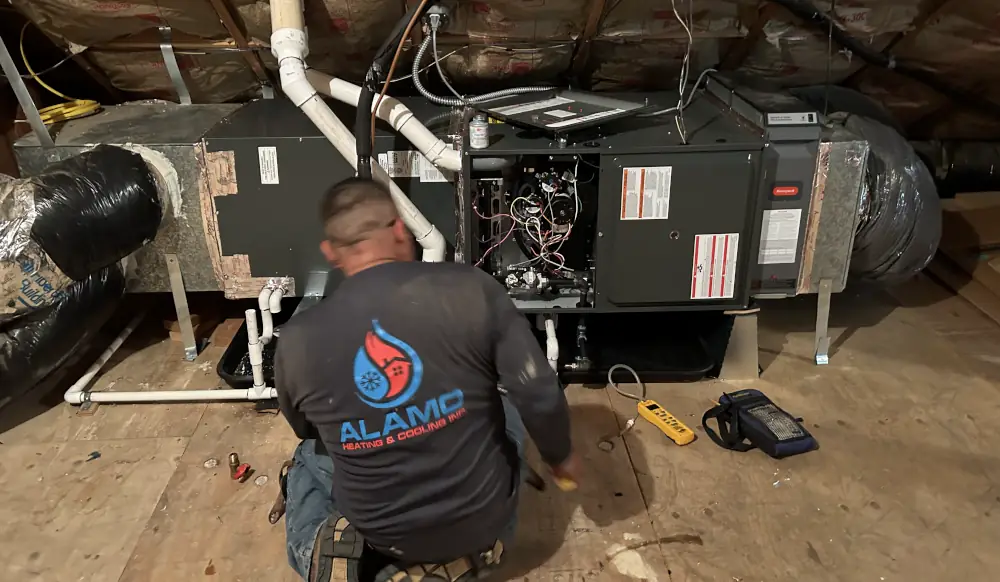
Why Your Furnace Won’t Turn On and What to Do About It
When your furnace won’t turn on, you don’t need to panic or immediately call a technician. In most cases, the issue can be something simple that you can fix yourself. Common reasons include a tripped circuit breaker, thermostat problems, dirty filters, or a closed gas valve. Before spending money on a service call, try these troubleshooting steps to get your heating system working again. Many homeowners can solve their furnace problems in just a few minutes with these basic checks.
Table of Contents
| Common Furnace Problems | Possible DIY Solutions | When to Call a Pro |
|---|---|---|
| Tripped circuit breaker | Reset the breaker | If it keeps tripping |
| Thermostat issues | Check settings, replace batteries | If display is blank after battery change |
| Dirty air filter | Replace filter | If furnace still won’t start after replacement |
| Closed gas valve | Open the valve | If you smell gas |
| Ignition problem | Reset furnace power | If reset doesn’t work |
| Clogged condensate line | Clear visible clogs | If line is severely clogged |
| Dirty flame sensor | Not recommended for DIY | Call immediately |
1. Check Your Thermostat First
When your furnace won’t turn on, the thermostat is the first place to look. This small device controls your entire heating system, and simple issues here can prevent your furnace from working.
Verify Thermostat Settings
Make sure your thermostat is set to “Heat” mode, not “Cool” or “Off.” This might seem obvious, but it’s easy to overlook. Check that the temperature setting is at least 5 degrees higher than the current room temperature. If the thermostat doesn’t “call” for heat, your furnace won’t turn on.
Replace Thermostat Batteries
Dead batteries are a common reason why your furnace won’t turn on. Most thermostats will show a low battery warning, but not all do. Try replacing the batteries even if you don’t see a warning. Use fresh batteries and make sure they’re inserted correctly.
Check for Thermostat Malfunctions
If your thermostat screen is blank even after replacing batteries, it might be malfunctioning. Try gently removing the cover and checking for dust or loose wires. Sometimes, a gentle cleaning with a soft brush can solve the problem. If the screen remains blank, you might need a new thermostat.
2. Inspect Your Circuit Breaker
Even if your furnace runs on gas, it still needs electricity to operate the fan, ignition system, and controls. When your furnace won’t turn on, a tripped circuit breaker could be the culprit.
Locate Your Electrical Panel
Find your home’s main electrical panel, usually in the basement, garage, or utility room. Look for a breaker labeled “Furnace,” “HVAC,” or “Heating.” If you’re not sure which one it is, look for any breaker that’s flipped to the “off” position or is sitting in the middle position.
Reset the Breaker
If you find a tripped breaker, reset it by pushing it fully to the “off” position first, then firmly to the “on” position. Listen for a click that confirms it’s properly set. If the breaker trips again immediately, don’t keep resetting it. This indicates a more serious electrical problem that requires professional help.
3. Check and Replace Your Air Filter
A clogged air filter is one of the most common reasons why a furnace won’t turn on. When airflow is restricted, your furnace may overheat and shut down as a safety measure.
Locate Your Furnace Filter
The filter is usually found in the return air duct or in a slot on the furnace itself. Turn off your furnace before checking the filter. Slide the old filter out and note which way the airflow arrow points, you’ll need to install the new one in the same direction.
Inspect and Replace if Needed
Hold the filter up to a light source. If you can’t see light through it, it’s too dirty and needs replacement. Even if it doesn’t look very dirty, if your furnace won’t turn on and it’s been more than three months since you last changed the filter, replace it anyway.
Choose the Right Replacement Filter
Use the same size and type as the old filter. The dimensions are printed on the filter frame. Basic fiberglass filters should be changed monthly, while pleated filters can last up to three months. After installing the new filter, turn your furnace back on and see if it resolves the issue.
4. Verify Your Gas Supply
If you have a gas furnace that won’t turn on, check if it’s getting fuel. No gas means no heat, no matter what else you try.
Locate and Check the Gas Valve
Find the gas supply pipe leading to your furnace. There should be a valve handle on this pipe. When the handle is parallel to the pipe, the gas is ON. If it’s perpendicular (forming a cross with the pipe), the gas is OFF. Make sure it’s in the ON position.
Listen for the Gas Valve Opening
When your thermostat calls for heat, you should hear a clicking sound as the gas valve opens. If you don’t hear this click, there might be an issue with the gas valve or the furnace control board.
Check Other Gas Appliances
If your furnace won’t turn on and you suspect a gas supply problem, check if other gas appliances like your stove or water heater are working. If none of them work, you might have a gas supply issue that requires contacting your gas company.
Important Safety Note: If you smell gas (rotten egg odor), leave your home immediately and call your gas company from a safe location. Don’t attempt any repairs or turn on/off any electrical switches if you suspect a gas leak.
5. Inspect the Condensate Line
High-efficiency furnaces produce condensation that must drain properly. If your furnace won’t turn on, a clogged condensate line could be triggering a safety switch.
Find the Condensate Drain Line
Look for a small plastic pipe coming from your furnace that leads to a floor drain or condensate pump. This line removes water created during the heating process.
Check for Blockages
Inspect the line for visible clogs or kinks. Sometimes the line can get blocked with algae or debris. If you see a clog near the end of the tube, you can try carefully clearing it. Make sure the line isn’t frozen if your drain area is in a cold location.
Empty the Condensate Pump
If your system uses a condensate pump (a small box near the furnace), check if it’s full. Some pumps have a safety switch that will prevent the furnace from running if the pump reservoir is full. Unplug the pump, empty it, clean it if needed, then plug it back in.
6. Reset Your Furnace
Sometimes when your furnace won’t turn on, it just needs a reset. This is like restarting your computer when it freezes.
Find the Power Switch
Look for a switch on or near your furnace that looks like a regular light switch. It might be on the furnace itself or on a nearby wall. This is the furnace power switch.
Perform a Power Cycle
Turn the switch to the OFF position and wait for 30 seconds. Then turn it back to the ON position. This simple reset can clear minor electronic glitches that might be preventing your furnace from turning on.
Check for a Reset Button
Some furnaces have a dedicated reset button, often red and located on the blower motor or near the burner assembly. If your furnace has one, press and hold it for about 30 seconds, then release. Wait a few minutes to see if the furnace starts up.
7. Look for Blinking Lights
Modern furnaces have diagnostic systems that can tell you why your furnace won’t turn on. These systems use blinking light codes to communicate problems.
Find the Status Light
Open your furnace’s access panel and look for a small window or light, usually on the control board. You might see a light blinking in a specific pattern.
Count the Flashes
Count how many times the light flashes before pausing. This is the error code. For example, three flashes might indicate a pressure switch problem, while four could mean a high limit switch issue.
Check the Code Chart
Look for a chart on the inside of your furnace panel that explains what each code means. If you can’t find one, check your owner’s manual or search online using your furnace’s make and model number along with the flash code you observed.
When to Call a Professional
While many issues can be fixed yourself, some situations require professional help when your furnace won’t turn on.
Safety Concerns
Call a professional immediately if you notice any of these warning signs:
- Gas odor (rotten egg smell)
- Burning smells coming from the furnace
- Unusual noises like banging, scraping, or grinding
- Visible smoke or soot around the furnace
- Circuit breaker that keeps tripping after reset
Persistent Problems
If you’ve tried all the steps above and your furnace still won’t turn on, it’s time to call a professional. Some issues require specialized tools, knowledge, and parts that most homeowners don’t have.
Regular Maintenance
Even if you get your furnace working again, consider scheduling a professional maintenance visit. Annual tune-ups can prevent future breakdowns and extend the life of your heating system. They can also identify potential problems before they leave you in the cold.
Preventing Future Furnace Problems
Once you’ve solved the immediate issue of your furnace not turning on, take these steps to prevent future problems.
Schedule Regular Maintenance
Have your furnace professionally serviced once a year, ideally before the heating season begins. A technician will clean, inspect, and tune up your system to keep it running efficiently.
Change Filters Regularly
Mark your calendar to check your furnace filter monthly during heating season. Replace it when it looks dirty or at least every three months. This simple task can prevent many common furnace problems.
Keep Vents Clear
Make sure all supply and return vents in your home are open and unblocked by furniture, rugs, or curtains. Blocked vents can cause your furnace to work harder and potentially overheat.
Install a Carbon Monoxide Detector
For safety, install carbon monoxide detectors near your furnace and on each level of your home. Test them monthly and replace batteries annually. This isn’t directly related to your furnace turning on, but it’s an important safety measure for any home with gas appliances.
Frequently Asked Questions
Why does my furnace turn on but no heat comes out?
If your furnace turns on but doesn’t produce heat, check if the fan is running but the burners aren’t igniting. This could be due to a faulty ignition system, pilot light issues, or gas supply problems. Make sure your thermostat is set to “heat” mode and the temperature is set high enough to trigger heating.
How long should I wait after resetting my furnace?
After resetting your furnace, wait at least 5 minutes before expecting it to turn on. Modern furnaces have built-in delays for safety reasons. If nothing happens after 30 minutes, try the other troubleshooting steps or call a professional.
Can a dirty flame sensor cause my furnace not to turn on?
Yes, a dirty flame sensor can prevent your furnace from turning on or cause it to shut off shortly after starting. The flame sensor is a safety device that verifies the gas is being lit. When covered in carbon deposits, it may not detect the flame properly. Cleaning the flame sensor is possible but best left to professionals unless you have experience.
Why does my furnace only work sometimes?
Intermittent operation often points to a failing component like a control board, pressure switch, or limit switch. It could also indicate an oversized furnace that satisfies the thermostat too quickly. Keep a log of when the furnace won’t turn on to help identify patterns that a technician can use for diagnosis.
Is it normal for my furnace to make a clicking sound but not turn on?
Clicking without startup usually indicates an ignition problem. Your furnace is trying to light but failing. This could be due to a faulty igniter, gas valve issues, or flame sensor problems. If you hear multiple clicks followed by nothing, it’s best to call a professional as this requires internal furnace inspection.
Keep Your Home Warm and Comfortable
When your furnace won’t turn on, it can be stressful, especially during cold weather. The good news is that many furnace problems have simple solutions you can handle yourself. By checking your thermostat, circuit breaker, air filter, and other components we’ve discussed, you might get your heat back without calling for help.
Remember that regular maintenance is the best way to prevent future problems. Change your filters regularly, keep your vents clear, and schedule annual professional tune-ups.
If you’ve tried everything in this guide and your furnace still won’t turn on, it’s time to call the experts. Alamo Heating and Cooling can diagnose and fix even the most challenging furnace problems. Our experienced technicians will get your heating system working efficiently again, keeping your home comfortable all winter long. Contact us today to schedule your appointment and restore warmth to your home.