

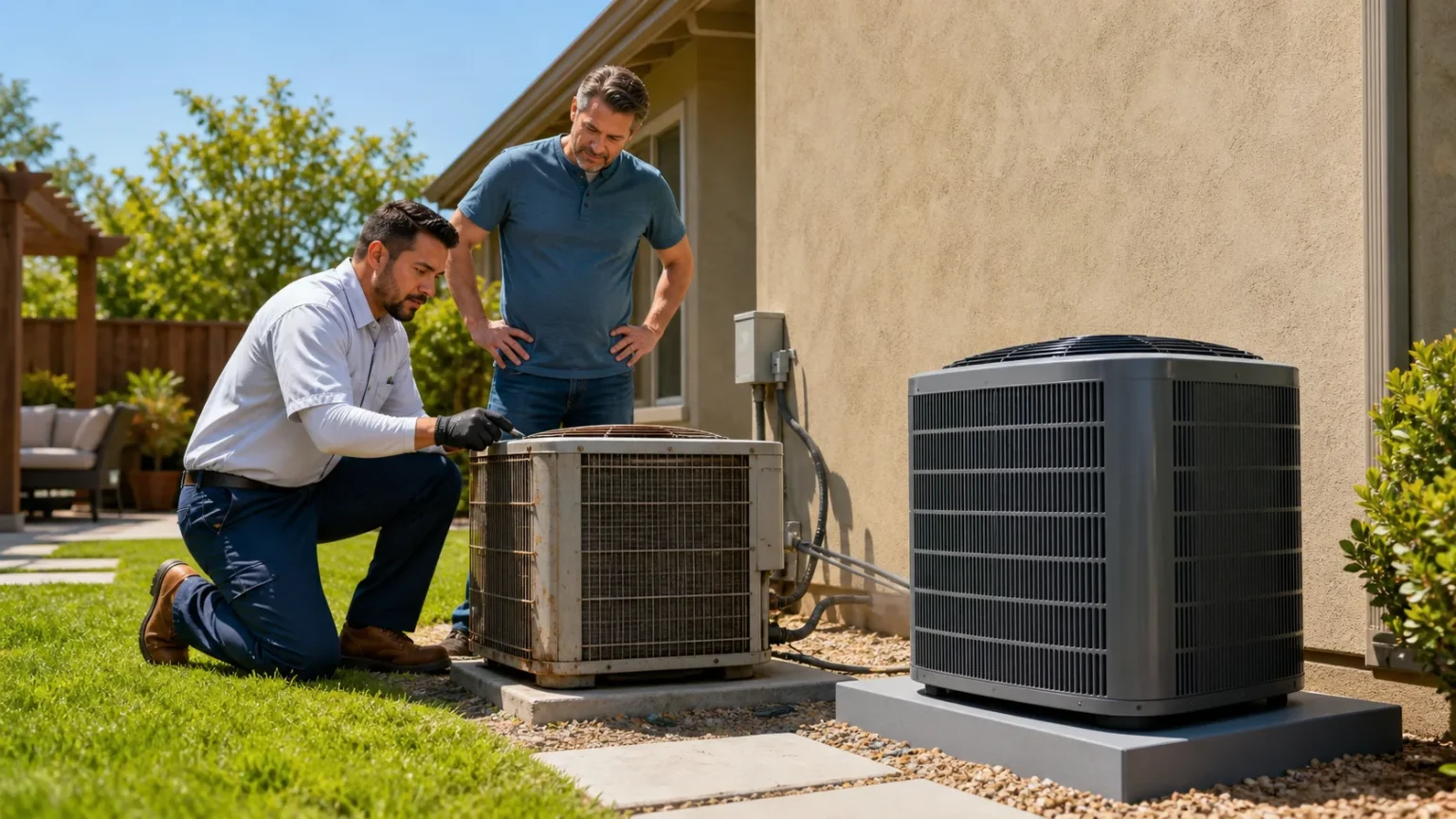
Make the Right Call on Your Aging HVAC System
When your AC is groaning through a Vacaville heat wave and your power bill keeps climbing, it is natural to wonder if you should keep fixing it or finally replace it. The same question comes up when your furnace struggles on cold nights and you start worrying if it will fail at the worst time. This choice affects more than your wallet. It touches your comfort, your safety, your indoor air quality, and what you will be spending on energy for years.
We like to keep this decision simple by looking at four things: system age, repair frequency, refrigerant type, and any rebates or incentives that might apply to you. With a clear framework, you can make a calm, smart choice instead of a rushed one during a breakdown. As a local, family-owned, insured HVAC company in Vacaville, we focus on personal recommendations and are available 24/7 for true emergency HVAC problems only, so you are not left on your own when your heating and cooling systems act up.
Start with System Age and Comfort Expectations
System age is often the first filter. In general, air conditioners and heat pumps last around 10 to 12 years. Furnaces tend to run longer, often 15 to 20 years. In Vacaville, where summers can be long and hot, AC units usually work harder, which can shorten their life compared with cooler areas.
Here are simple age guidelines to start with:
- Under about 8 to 10 years and working fairly well, repair is usually a smart first option
- Around 10 to 15 years for AC or heat pumps, replacement starts to make more sense, especially if you have other issues
- Around 15 to 20 years or more for furnaces, it is often wise to start planning for a new system instead of putting money into big repairs
Age is not the only factor. You also want to ask what you actually want from your home comfort. Do you want more even temperatures from room to room? A quieter system so you do not hear it cycling on and off all the time? Better control of humidity? Cleaner air for allergies or asthma? Or is your top goal simply the lowest upfront cost right now?
When we come to a home, we walk through current pain points, such as:
- Rooms that never get cool or warm enough
- Dust that keeps coming back fast
- Noise when the system starts up or runs
- Allergy or breathing issues that feel worse indoors
Then we talk about how newer, higher-efficiency heating and cooling systems can address those problems, not just replace what you already have with more of the same.
Use Repair Frequency and Costs as a Reality Check
Age sets the stage, but repair history tells the real story. A minor repair every couple of years is usually normal. Things wear out, especially in a place with heavy AC use like Vacaville. But if you are calling every summer or every winter, your system may be trying to tell you it is near the end.
A simple “frequency filter” looks like this:
- One small repair every few years: probably OK to keep repairing
- One significant repair almost every year: time to start thinking about a plan
- Two or more major repairs in 12 to 18 months: strong sign the system is failing
Costs matter too. If a single repair is more than roughly 30 to 40 percent of the cost of a new system, it is a good idea to slow down and compare. If you add up repairs from the last two years and they are creeping toward half of what a new system might cost, you may be throwing money at a unit that is still old and inefficient even after the fix.
There are also hidden costs when you keep limping along:
- After-hours emergency service when a unit dies in a heat wave or cold snap
- Missed work or lost sleep while you wait for service
- Higher energy bills from an inefficient system running longer than it should
- Stress from not knowing if the next breakdown is just around the corner
When we look at repair vs. replace, we like to lay out side-by-side options and ask about your budget, how long you plan to stay in the home, and what level of comfort matters to you before suggesting a path.
Refrigerant Type, Efficiency, and Utility Rebates
Refrigerant type is another big clue. Older AC systems that use phased-out refrigerants such as R-22 are usually more expensive to service because the refrigerant is harder to get. If a system like that is also 10 years old or more, major repairs often make less sense. You could spend a lot just to keep an older, less efficient unit going.
Age and refrigerant often go hand in hand with efficiency ratings like SEER for cooling and AFUE for furnaces. Older equipment typically has lower ratings, which means it wastes more energy to deliver the same comfort. That really shows up on utility bills during the hottest summer weeks and the coldest winter nights.
The good news is that there are often rebates, manufacturer promotions, and sometimes tax credits that can help lower the cost of higher-efficiency systems, including:
- High-SEER central AC units and heat pumps
- Furnaces with advanced, variable-speed blowers
- Systems designed to improve air quality while they heat and cool
Because higher-efficiency systems usually use less energy, the long-term cost over the life of the unit can be close to, or sometimes even less than, a standard-efficiency system. Our goal is to help make these higher-efficiency options more affordable than standard ones whenever we can. We actively look for current rebates and incentives and explain in simple terms how much you might save on energy with a higher-efficiency system compared to a basic replacement.
Vacaville-Focused Decision Checklist for Late Summer
Heading into late summer and early fall, many homeowners ask if they should repair now, replace before next summer, or just wait. A quick checklist can bring some clarity. Walk through these items:
- Age of your AC, heat pump, and furnace compared with typical life spans
- Number and size of repairs in the last 24 months
- Refrigerant type and how easy it is to find parts and refrigerant for your model
- Current utility bills compared with what you paid in recent years for similar weather
- Comfort issues such as hot or cold spots, humidity swings, noise, or stale air
- Any safety or reliability worries as you head into more heat or the heating season
Then use these simple guideposts:
- If your system is under 10 years old, has had few low-cost repairs, and your bills and comfort are acceptable, repairing is usually reasonable
- If your AC is around 12 to 15 years or more, your furnace is around 18 to 20 years or more, repairs are frequent, and bills are creeping up, it is time to consider a planned replacement
- If your unit uses R-22 or is clearly low-efficiency and you qualify for rebates or incentives, upgrading to a higher-efficiency system is often the smarter long-term choice
We treat this checklist as a starting point, not a hard rule. Every home and business is different. We help tailor these questions to your building, your comfort goals, and how long you expect to stay there.
Talk with a Local Expert Before You Spend Another Dollar
Before you put more money into a big repair, it helps to have a calm, local opinion. When we visit a home or business, we start by inspecting the current heating and cooling systems, then we ask about your comfort issues, noise concerns, air quality worries, and what your energy bills have looked like. We also ask what you prefer in terms of efficiency and what fits your budget.
Since we are an insured, family-owned HVAC company, we provide clear, written options that usually compare the cost of repair today, an estimate of how much life the current system may have left, and several replacement choices at both standard- and higher-efficiency levels. We also show estimated energy savings and any rebates that may apply. We are available 24/7 for true emergency breakdowns, but when possible, we encourage planned, off-peak replacements to lower stress and help you get the most comfort for your money.
Improve Your Home Comfort With Reliable Heating And Cooling Systems
If your current setup struggles to keep your home comfortable, we can help you upgrade to modern, efficient heating and cooling systems tailored to your space. At Alamo Heating and Cooling, we evaluate your home, budget, and comfort goals so you get the right solution the first time. Reach out today through our contact page to schedule a consultation and take the next step toward a more comfortable home.